

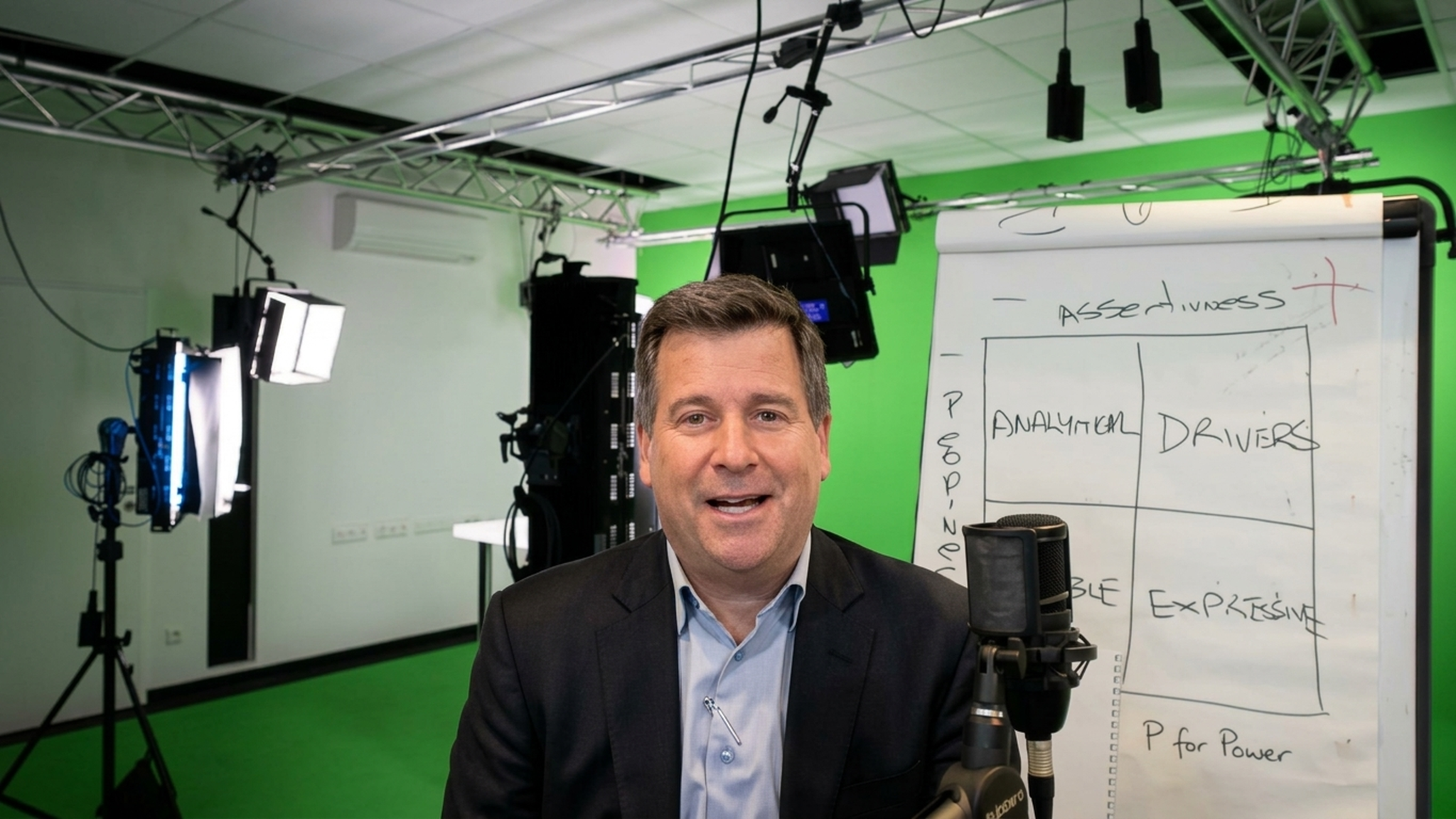
In this episode we start a mini series about customer types. Kicking it off with a brief journey into the history behind psycho metric profiles.
We then move on to a brief explanation of the four customer types, and how people can be one type in their work life and another in their personal life.
This little series will cover 5 episodes and will be great to use in your sales meetings.
Here are the highlights:
{03:10} 400 BC – 4 Types
{06:03} World War 2
{09:32} 4 Types Symco Use
{12:35} Same result, achieved in a different way
{21:18} Wolf of Wall Street
About Symco Training:
Symco Training was founded in 2000 by Simon Bowkett and it was his belief that the business had to offer its clients something different. That difference was clear to Simon from his days in the dealership when he experienced many sales trainers who had all the answers, but were unable, unwilling or both to actually show the delegate how they could be implemented. It remains the ethos of the business today. You see, Symco only employ trainers that are committed to delivering not only in spiring and insightful training, but are equally as happy to demonstrate these skills and techniques with real customers in your own showroom. We believe in order for sales training to be effective and in Simon’s words ‘real world’, it needs to be tried and tested in the only place it matters the showroom floor. There is no room for theory when your goals are for your team to sell more cars, hours or parts and retain more profit. In dealerships around the world the focus applied by many of the sales executives is to try and sell a deal. Symco specialise in getting your teams to focus on selling themselves, the product and then supporting this with the deal.
To find out more visit
www.symcotraining.co.uk
Welcome to the Selling in the Motor Trade Podcast, an association with Symco Training. This is the weekly podcast where we share best practice tips and ideas on how to sell more cards, improve your service department and generally put more profit into your dealership or dealer group. I'm your host, Simon Bowkett. As some of you probably already know me as skipping, I will start with saying thank you for taking the time to listen to this podcast. Hi and welcome back to another episode of Selling in the Motor Trade. This is another one of these episodes that you're probably going to want to send it through to your sales team. Maybe you're going to play this in your sales meeting in the morning. This is something that comes from our sales fitness online sales training program. And of course, remember, if you like some of the content on this podcast, you can find the link in the description below. You know we don't give all the good stuff. You know that we give all the good stuff, the people who pay for our sales fitness training program. Now we have some signature programs there. We have the first 90-day program. That's designed for people who just start in the motor trade. We have the master class. It might be for people a little bit more experienced, but they need to sharpen the saw or sharpen the axe as the phrase says. We've got today's service advisor. We've got customers first contact dealing with the email inquiries, digital inquiries, doing the videos on the car, telephone inquiries, following up unsold customers and prospecting. And that's a structured program. We price it very competitively. It's $2.99 per person. They get all the content and so structured process to take them through the whole program. But listen, we know lots of you guys like to look at the free stuff. And you play this in sales meetings. So we're going to give you a little taste of the personality type training that we do on our sales fitness program. Now you may have done a psychometric profile when you're employed into the motor trade or actually lots of different industries do it. In fact, you might do it when you're recruiting people at the moment. Okay? You know, it's like we're asking you all these questions, 24 questions, are you most like this? Are you least like that? And gives you this lovely report about how, well, very accurately sometimes what that person's like. Where did all those psychometric profiles come from? Well, actually, I've heard so many different stories about where it comes from. And it's kind of like people saying, oh, no, no, we come up with it. No, we come up with it. And I'm not sure of the truth. You just go and Google it. You'll find so much different conflicting information. So I'll just tell you some of the stuff I've heard of where it's come from and I'll let you decide. The first time if you go all the way back to Hipparchies, okay? Now we're talking about 400 BC. Hipparchies, which was the Greek physician, 10 ran said there was four types of people, four humans, I think he called it. The first one he said, there were people who were sanguine. And those people were enthusiastic, active and very social. Then he said there were some people were choleric. They were short tempered, fast and sometimes irritable. Then you had the people who are melancholic. Those people were analytical, quiet, often seen as wise. And then he had the people who are phlegmatic. And those people were relaxed and peaceful. Now that was 400 BC. And if you're thinking about the test that you may have done in the past with the different colours or something like that, it kind of fits in. After that we've got to go to 1921. And there's a guy called Carl Jung. Now I don't know if I'm pronouncing his name right, okay? But Carl Jung turned around and said he was a Swiss psychiatrist. And he turned around and he said there's different types of people, okay? Everything, feelings, sensation and intuition. We also talked about the introverted style and extroverted style, okay? But when you actually have a look at his work, there's the four different categories that you often see in discus and Myers-Briggs and avian or all those other things then. So those four different types of personality styles. So that was in 1921. Then we go to 1928, a guy called William Marston come up with the disc model. He wrote a book, The Emotions of Normal People. Now you're going to be normal for this one to work then. But what he said is the four main categories were dominance, influence, steadiness and conscientiousness. So if you've ever done the discus profile, it fits into one of those. And after that in the 40s, we had a lady called Catherine Briggs. She took all of that information and with her daughter Isabelle, Myers, they come up with the Myers-Briggs type indicator. And they kind of put them into different colors there. You had, and by the way, there's lots of different ones out there that have the reds, which is kind of like the drivers if you go back to William Marston's. You get the yellows, which are kind of like the influencing people or some of these other tests that happen out there. The yellows, they're the expressives. They turn around and said you've had the people that are the analytical, some of the tests you've done out there before, they're the greens. Then you had the blues, which are the analytical, sorry, the amiable of the greens. Then you had, I heard in World War II, they had very quickly identify what people like. Now, they knew there were these four different types of people. And the story I heard, and it makes a lot of sense to me, in World War II, they had a lot of round pegs in square holes. Now what they mean by that is there's some of the gunners in the heat of the battle were freezing to the detriment themselves and the whole brew. They analyze their wreckage after planes been shot down in these B-17 flying fortresses and Lancaster bombsons and they just didn't fire. And also some of the navigators were a little bit too gung ho. It's this way, we've gone the wrong way. So I heard there's two psychologists up in Scotland, they were tasked to find out very quickly how someone was going to act within the heat of the battle before they're in the heat of the battle. Because before this, all of these Myers-Briggsum, William, Marston's and Akal Young and whatever, they required lots and lots of analyzing the person in their work and their home, speaking to work colleagues and family and friends to identify what they're like. That's a long process. They didn't have time to do it. Back to the World War II example, the story I heard was there were some navigators were too gung ho. Apparently, there's one Lancaster bomber crashed after dropping their bombs in Germany because they hit the mountains around Snowdonia in Wales. Now, if you look at a map, how far wrong did that do I get that navigation? The theory is they crossed the English Channel and it was all fogged in. They didn't realize it was there. So they kept on going west. They got to the Bristol Channel, thought it was the English Channel, crossed it, turned right or north, expecting the flat lands around Lincolnshire. They went back into cloud and hit some of the mountains around Snowdonia in Wales. Now, apparently to this day, some of the wreckages still up there. I think they call it bomber alley. Okay, whenever I mention things like that, I will get an email or a text from one of you guys there or WhatsApp saying, no, no, no, it's actually on this mountain on whenever it was. Okay. But very quickly, round pigs and square holes. So in World War II, they found out that most of our personally traits come back just to two main things. That's assertiveness and responsiveness. Now, someone could be high or low on the assertiveness or high or low on the responsiveness to people. So you know what? Let's have a look at some of these other tests you've done. And more importantly, how can we use them in a selling environment to very quickly identify what type of customer is in front of you? The firm is that type of customer, but more importantly, how do you deal with that type of customer? So when we do this, I want you to think about some of your work colleagues, some of the people, some of your salespeople, your team, maybe your boss, your partner, your children, and start thinking about the people and what they like. So let's take the first access to this. So I'm going to take someone like Hitler. Now, I'm only going to use that because it's such an extreme case, okay? Would it be fair to say he's probably high on the assertiveness? I think so. We went and invaded all the countries and done all that sort of stuff, probably. Here's the next one. On the responsiveness to people. Was he more task or more people orientated? Arguably, you might say he was more task-orientated, okay? He's more interested in getting the task done than people. He's owned people as well. So we'd probably say he would be low on the assertiveness. Now I know that most of you people are listening to this, driving to work or going for a run or something like that. And again, if you look at our sales fitness program, we'll show you on the graph exactly how this works. But imagine a matrix. So you got high on the assertiveness and lower on the responsiveness to people. They would call those people on the top right hand box there, be, well, depending on which test you've done, okay? But they would actually call those people the drivers, okay? Some of the tests you may have done in the past, they're called the Reds. At Simcoe Training, we call them the Lions. And the reason why we call them that animal is very quickly for us as salespeople to work out how to deal with that particular animal. Now listen, on a podcast in the future, we're going to talk all about these drivers, the Reds, the Lions, how to identify them when they walk in, what their dress is like, how they talk, okay? They're conversations. But more importantly, how to ask for the business for those people. And you have some people there who probably like myself if you've ever been on one of our training courses. I'm probably higher on the assertiveness, but probably high on the responsiveness to people. They would call those people there the Expressives. Some of the tests you've done in the past, they might call them the yellows, okay? Simcoe Training, we call them the puppy dogs. Because what's a puppy dog actually looking for? The attention, the pat on the back, okay? Then you've got maybe someone like your host in the business, okay? And these people tend to be lower on the assertiveness. Now, of course, whenever I say stuff like that, people say, you haven't seen our host, okay? So I'm generalizing here, okay? But if you've got someone that's lower on the assertiveness, it doesn't mean they don't know what they want, okay? They just want to achieve it in a different way. They don't yell and rant and rave and scream. But actually you've got someone very, very high on the responsiveness to people. Some of these tests would call them the amiable. Okay? Some of the tests you've done in the past, they call them the greens. We call them the mouse. The mouse is the customer that might be a little bit more apologetic, okay? Quieter, softer. And again, we're going to talk about how to identify that person, that customer on the next, or the next one of these. Otherwise this will go on and on and on. Okay? Then we've got the analytical people. Now there are the people that you get people in the accounts department, sometimes very technical people there, they tend to be lower on the assertiveness. Now again, you might say, well, our financial director is very high on the assertive. Well, let's talk about that. Does he actually come in and yell and rant and rave and scream? Was he more likely just to send an email and say, that's not acceptable? Okay? They might still know exactly what they want, but it's how they achieve it. Okay? And they might be lower on the responsiveness to people, okay? Responsiveness. Those are the people, they're called the blue people, the analytical people. Can you guess what? Animal, we call them. At Symco Training, we call them the snakes. Not because they're slimy, beady-eyed people, because a snake analyzes its prey. A snake has no teeth to rip flesh off. Okay? So a snake will only attack something, it knows it can win. In fact, sometimes you see on these TV programs, there's this young girl, 10-year-old girl, and there's this huge snake wrapped around her neck. And Emma, my wife will say, oh my goodness, what were those parents thinking? That snake could kill her whenever they wanted. It could, but it never will, because it knows it can't eat her. Okay? In fact, I've had a few people in training courses that have kept snakes over the years, and I've heard this story a few times. I don't, again, I don't know if it's true there, but I can imagine it's true. I've heard stories where the snake was not eating. They took it to the vet because they were worried about the snake, and they said, oh, it's still very friendly. It goes into the kid's bedroom. It lies down beside the kids when they're sleeping. And apparently, the vet says, get that snake out of the house right now, because it's just sizing the child up, working out when it can eat it, and it's stopped eating because it's making space to try and eat it. Now, again, I don't know why anyone would want to keep a pet snake, but the snake, the point is it'll only attack something and it knows it can win. It analyzes. I'm guessing because it doesn't want to waste venom or energy because it's a cold-blooded animal. So what we've got here, we've got the lions, the puppy dogs, the snakes, and the mouse. Now, I like the World War II approach because you just need to look at two things to identify what that customer's like, high or low assertiveness, high or low responsiveness to people. And I'll put you into one of these boxes. Now, guys, this, of course, is an over-simplification. It's not fair just to put people into one box because these real tests, they measure how much we have on each one of those. They tend to give you a percentage. Some people have a dartboard and they put a dot wherever they are. Now, also, these real tests, they measure what you really like on the inside and then how you portray yourself at work. I see most people see me in a training environment as the expressive yellow, the puppy dog. That's why I do this for a living. But I'm a good friend and client of mine, Mr. Paul Tench. I was doing some training with his group recently. He said, oh, my goodness. Now, Paul has known me from a good, I don't know, five years before I actually was doing some work with his dealer group. He knew me on a personal level. He said, you know what, Simon? You're completely different down the air club, down the airfield than what you are when you're training. It's like a different person because deep down inside, I'm truly a lion. You speak to some of the guys that work with me. They say, yeah, yeah, working for you, Skip, you're definitely a lion. But at work, most people see me as that puppy dog. So these real tests measure what you really like on the inside and how you portray yourself at work. So what we do is on the sales fitness program, and when you do our training programs, we'll get people to analyze themselves first. But you can quickly do it now. You can be high or low on the assertiveness. What are you? High or low? Now, I want to talk about that. It doesn't mean you don't know what you want, but let's take it. You and your partner want to go and watch a movie. Do you want to watch Ockenheimer, but your partner wants to watch Barbie or vice versa? The highest certain person would say, I'm not watching Barbie. I'm not watching that. No, no, we'll go and watch this. The lowest certain person might get what they want, but by getting the other person to want to do it. Well, yeah, we could go watch that. But you know what, Margot Robbie's in Barbie and it finishes earlier, so we can get a meal as well. They still know what they want, though, but they might get it in a different way. So, certainness, you have high or low on the assertiveness. It's the same as the responsiveness to peopleness. Now, they never call it peopleness. That's just how I understand it, my little P brain. OK, they said responsiveness. But actually, you might have someone that's such a generous, nice person, but they're almost shy. OK. You might have someone who is a con artist. OK, they're so precarious. They're over the top. There's so much peopleness, but actually they're not a nice person. OK, you see some people out there, these con artists, there's great movies like Wolfa Wall Street. OK, listen, I know that Jordan Belford runs his own sales training company. He's been to prison. He's paid his dues there. But so many times I get brand new salespeople say, oh, the movie Wolfa Wall Street, I love that. I want to be like that. Went really? And actually, even I think now that he wouldn't even do that either. Because I say, really, let's think this through. OK. He ripped people off for a living. He went to jail over it. That's documented. OK. The people he ripped off was pensioners. OK, the grandmas had the big pot of money. Wasn't he paid something like 100% commission? So they took $100,000 of grandma's life savings and they got $50,000 commission. Grandma's shares had to go up really, really well, didn't they? He was doing back in the 80s where they didn't have Google reviews. If you upset one person, did he have to sell them more shares? What, America's what? 250 million people at the time there. OK. In the motor trade, anyone could sell one car. We don't want to do that. We want to sell people there. Second, the third, the fourth car. We have Google reviews. Trust pilot nowadays. OK. We want to sell people the next car, the next car, next car. But the point I make is he was very high on the people, this. But maybe not that nicer person at the time. Now, I know he's reformed. OK. Don't. I'm going to get a lot of abuse on this one. This is from his own mouth. He said that. OK. But then the flip side, you might get someone that's so shy by how I had to work. They donate all the time to helping charities and people. And back to tell you what, the Wolf of Wall Street. Maybe here's the real reason why I struggled with that one. I'd never seen the movie. OK. I had lots of salespeople in the movies. Oh, I'll skip it. The Wolf of Wall Street. You're going to love it. You've got to watch that movie. In fact, I've had a few people say, you remind me of him. I never watched the movie. I sat down with my darling wife before we clicked play. I said, you know, I love people say, they remind me of him. It starts off a scene where he's sniffing cocaine off the body of a hooker. And Emma said, and why do people say the remind you him? I don't know. But listen, when you do this, OK, I want you to think, where are you honestly on your responsiveness to people? So many salespeople say, ah, I want to be high on the responsiveness of people. I want to be high on the assertiveness. Let me tell you guys, there's no right and wrongness. I've seen great salespeople who are the analytical snakes of the blues. I've seen great salespeople who are timid, soft, smiling assassin mouses. I've seen great salespeople are the red, the drivers, the lions. I've seen great salespeople and all of them. In fact, let me tell you about two people. One is the most timid mouse I ever come across. I had this with my own ears. Is a salesperson called Anil. He was in a Honda dealership. I've actually heard him say that he put a deal in front of the customer. He very assumptively went into. And the great news, Mr. Customer, the other had that car ready for you on Thursday, to which one the customer said, oh, no, no, Anil. We're really not happy with that 8,500-hour car. Very softly, timidly. Anil said, yes, it's a sad fact that vehicles do depreciate. But that's the market value on your car. Now, on the new car, as I said, I'll be able to have that ready for you on Thursday. The customer said, no, no, no, Anil, we really don't like that 8 and 1-2 grand for our car. I understand that, sir. But we do work within a market. We don't create the market. And as I said, the new car, if we aim for Thursday, on a delivery, no, no, no, Anil, we really don't want to take that. Well, that's fine, sir. If you want to sell the car yourself, that's fine. But please bear in mind to get to that payment. We will need clear funds of that 8,500. As I said, on Thursday, I promise you guys, the husband turned around to the wife. He shrugged, and he said, sorry, what time on Thursday? Now, guys, let me tell you, I could never, in a million years, pull that technique off. The only reason Anil could do that is because he was a lovely timid mouse. On the flip side, I've seen another salesperson say, great, thank you very much, that. Can we go and think about it? Well, no. Sorry. Quite frankly, no. Listen, when you took the car for a drive, you did say, I'm going to get the figures right. That's the car you like to be driving next door three years. So, come on, be honest with me. There's one of these figures you don't like. Which one don't you like? Now, here's the point. They both sell the same number of units, but they just do it in a completely different way. So, guys, what we're going to do is I just wanted to give you the foundations of this one. And we're going to do each one of these. We're going to talk about how to identify that customer. Okay. What their character traits are, but probably more importantly, how are you going to deal with them? What closing techniques, what objection handling techniques can you use for that customer? We're going to do these in small little episodes, so you can go back and have a listen to it. You can send it through to your salespeople because they know how to deal with that customer. Now, managers, listen to this. We haven't got time to go into all the management training, obviously. Okay. But listen on our sales fitness program, we go into the debts on that type of person there. So, over the next few weeks, we're going to talk about these different types of customers and how to specifically deal with that customer. What closing questions we would use? How do we identify them? How would we overcome their objections? So, let's see you next time. That just leads me to say that all details of this episode and other episodes on the selling in the Motor Trade can be found on our website simcotraining.co.uk. Go there to get a copy of our book, Words That Sell Cars. Go there to sign up to a free trial of our sales fitness online sales training program. Easiest way to get hold of me is Simon Bowkett, food linked in. Thank you.


